Without proper end-of-arm tooling your industrial and collaborative robots would just be mechanical arms swinging around without accomplishing any work. So, selection of the right robot grippers, robotic welders or other end-of-arm tooling is critical to the success of your automation project. This blog provides a look at the various types of end-of-arm tooling and how these devices enable industrial and collaborative robots to reach their highest performance potential.
What is Robot End-of-Arm Tool
End-of-arm tooling, EOAT and robotic end effectors are all terms used to describe the devices attached to the end of a robotic arm. These crucial automation components serve as a functional hand at the end of your robotic arm so that it may grasp, move and manipulate objects, allowing your robot to assemble parts, package products and even weld!
So, while robots and cobots receive most of the glory for increasing efficiency in industrial facilities, end-of-arm tooling deserves equal credit because these small, but important devices determine which tasks the robot can perform, as well as how accurately and quickly objects can be manipulated.
Types of Robot End-of-Arm Tooling
Because EOAT is critical to successful robotic automation projects, there are many kinds of end effectors to suit all sorts of tasks.
Some of the most used end-of-arm tooling devices include:
- Robot grippers: End-of-arm tooling grippers are the most common end effectors. Robot grippers grasp and hold objects so that the robot can pick up, move, assemble or package them. They may be mechanical grippers with two or three fingers, vacuum grippers that rely on suction to pick up smooth or delicate products, magnetic grippers for handling metal objects or even micro grippers for grasping and positioning very small objects. Grippers are also available in food-grade materials for use in the food and beverage industry. Robot grippers may be pneumatically, electrically or hydraulically powered, depending on the needs of the application.
- Tools and tool changers: Tools such as shears, drills, paint guns and deburring tools can be combined with robot end-of-arm tooling so the robot can perform a variety of tasks such as applying paint, drilling holes, cutting objects or finishing metal. Tool changers allow operators to quickly change out tools so a single robot can carry out a variety of tasks.
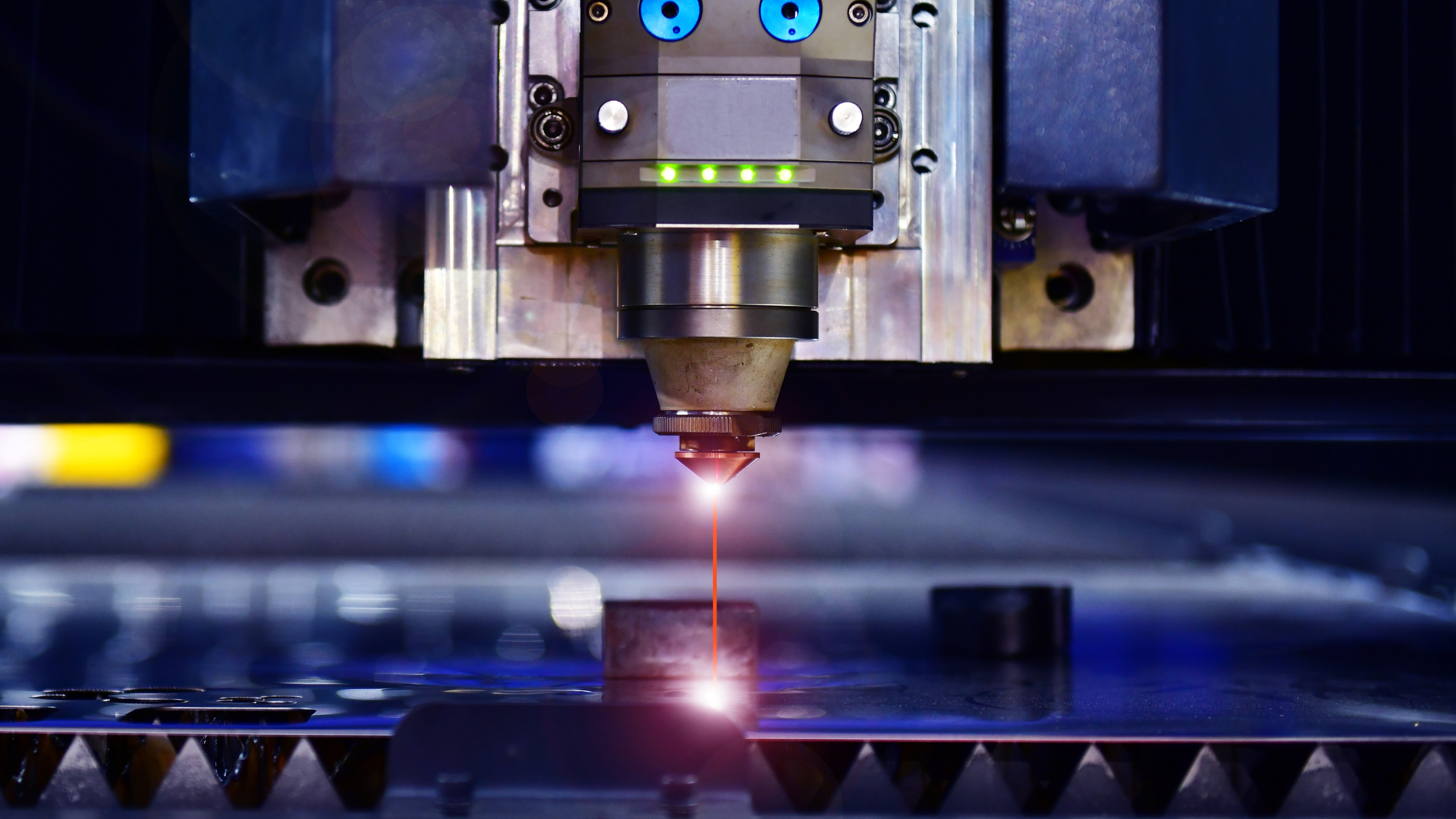
- Welding torches: Robotic welding arms automate the welding process in high-volume welding operations. To do this, a specialized welding gun can be used as end-of-arm tooling to create a robotic welder or a cobot welding robot. They can be programmed and reprogrammed to manage different welding tasks.
- Sensors: Sensors may be added to the robotic arm or EOAT to provide the robot with a sense of touch. Sensors can be used to increase precision or permit adaptive touch so robots can handle fragile objects or perform delicate tasks without damaging components.
Examples of End-of-Arm Tooling Applications
To give you an idea of how robot end-of-arm tooling can be used, we’ve provided several example applications by industry.
Food and beverage
Food-grade robot grippers may be used to pick up items such as cookies and place them into packages. With the addition of sensors, grippers can handle delicate items, such as fruit, and place them in containers or assemble products, such as frozen pizzas, without damage.
Automotive industry
Vacuum grippers may be used to place windshields on cars, while robotic welders complete welding tasks along the assembly line. The automotive industry also uses end-of-arm tooling and tool changers during assembly to increase efficiency, accuracy and consistency of the process. Tools such as spray painting guns provide high-quality car finishes.
General manufacturing
Robot grippers are used for a variety of tasks in general manufacturing, including pick and place, sorting, kitting, packaging, palletizing and CNC machine tending.
Electronics manufacturing
Micro grippers pick up, manipulate and assemble tiny electrical components.
5 Steps to Selecting End-of-Arm Tooling
Selecting the right end effector is essential to achieving the highest levels of efficiency, accuracy and consistency for your automated applications. Follow these five steps for optimal performance.
| Step 1: Define the Application/Task | Knowing the specific task your robot will perform and the object characteristics, such as material, shape and size, will guide you toward the right end effector. Will objects be delicate such as cookies; small such as electronic components; heavy such as a pallet, or smooth such as a windshield? Some applications such as robotic welding, cutting and spray painting will guide you toward the obvious EOAT for the task. |
| Step 2: Consider Payload and Grip Strength | Knowing the payload capacity ensures that a gripper can manage the weight of objects the robot will be handling. A trickier consideration is grip strength. Will the robot be manipulating delicate objects or very heavy objects? Electronic components will require a gentle grip, while heavy objects like windshields need a strong grip. |
| Step 3: Select a Power Source | Robot grippers operate using pneumatic, hydraulic or electric power. Pneumatics offer speed for high-volume applications, hydraulics are ideal for heavy-duty applications and electric-operated grippers offer high precision and control. |
| Step 4: Ensure Compatibility | Be sure the mounting interface and control system of the end-of-arm tooling work with your robot. Also, the location and environment of the robot/end effector placement may require specific materials or power sources. For example, food and beverage applications will necessitate food-grade materials, while explosive environments will favor pneumatic power sources. |
| Step 5: Consider Customization | Unique parts or complex applications may require a customized robot gripper. Also, if an application includes precision or adaptive grip, specialized sensors may be added. |
Call on the Experts for Robot Gripper Selection
Don’t jeopardize the success of your automation project by choosing the wrong robot gripper, robotic welder or end-of-arm tooling. Call on the experts at HTE. Our experience ensures optimal performance from the selected end effector, so you achieve the highest level of productivity and efficiency from your industrial robot or cobot.