
By: Tim Swedberg
Abrasive blast rooms are efficient and cost-effective spaces for surface cleaning large-scale workpieces before finishing. Industrial blast booths maximize productivity by providing a dedicated area for the abrasive blasting process and minimize operational costs by recycling leftover abrasives. Learn how these surface-preparation blast rooms work and when and why you need one in this blog post.
What is an Abrasive Blast Room?
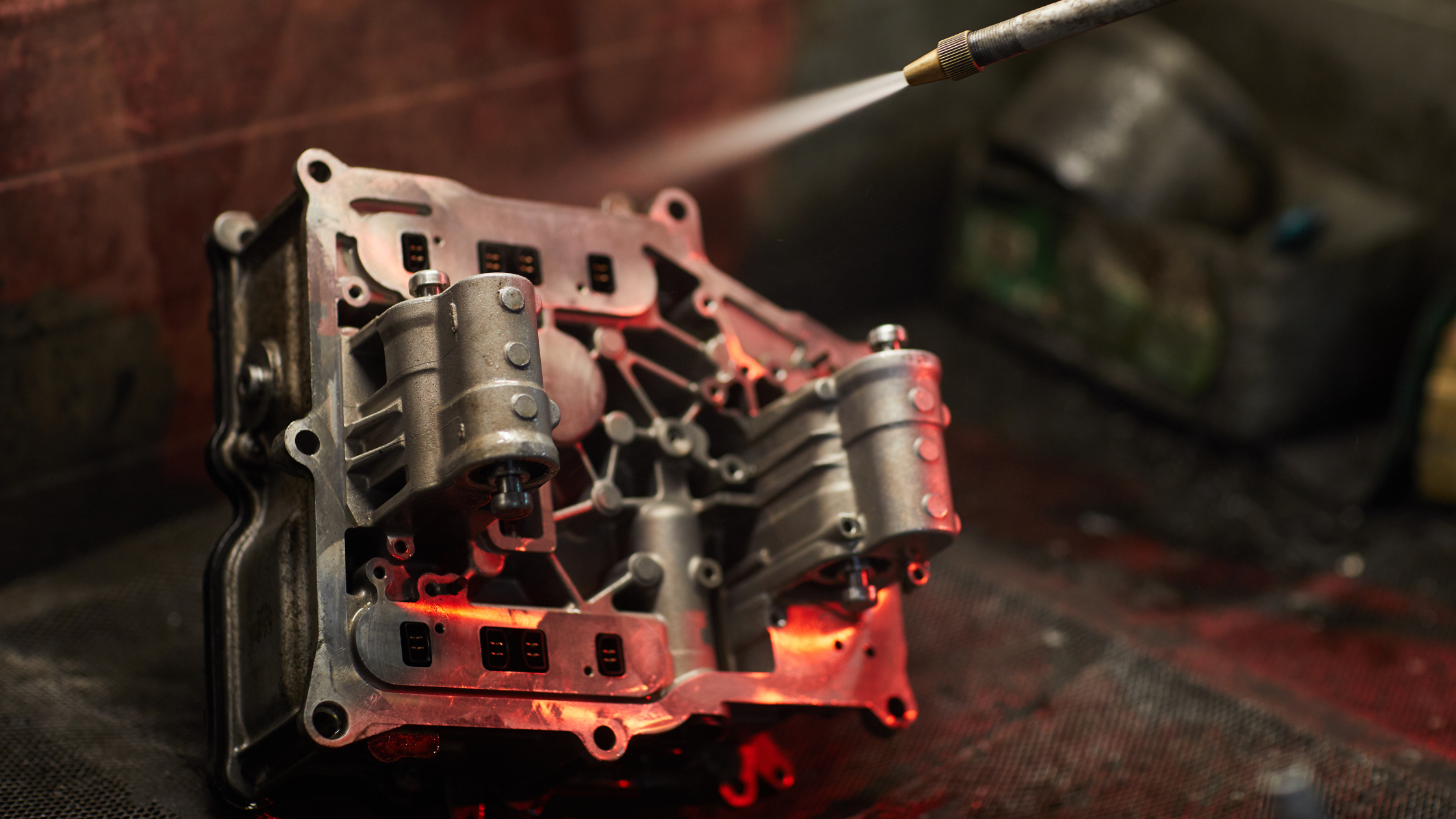
An abrasive blast room – also called an industrial blast booth – is an enclosed area where technicians perform abrasive blasting. The blasting process uses pressurized air to propel abrasive media against a workpiece to remove contaminants and coatings and prepare the surface for finishing. Glass, ceramic, plastic or metal beads, walnut shells, sodium bicarbonate and other abrasive materials can be used in the blasting process.
Abrasive blast rooms accommodate large-scale workpieces, an operator and the blasting equipment. Industrial blast booths also keep the abrasive blast media contained so it may be recycled for reuse.
Key Components of Industrial Blast Booths
Abrasive blast rooms are customized to meet the requirements of your unique blasting operation, but typically contain these components:
Blast room enclosure: These large, enclosed spaces are designed to contain large workpieces, the operator and the blasting equipment. Large-scale blasting facilities can accommodate big, bulky parts, including heavy-duty vehicles.
Blasting system: The blasting system uses pressurized air to shoot abrasive materials at the work surface through specialized nozzles. Operators start and stop the process using built-in valves.
Abrasive recovery system: Leftover abrasive materials are collected and moved into a dust collector that filters the air inside the blast room and keeps abrasive media from escaping into the facility.
Reclaiming system: Reusable abrasives are separated from contaminants and recycled back into the process.
How Do Abrasive Blast Rooms Work?
The blast room process contains four steps:
Key Benefits of Blast Rooms
These large-scale blasting facilities deliver money- and time-saving benefits for heavy-duty and high-volume operations.
Maximum productivity: Large, dedicated spaces for sizeable workpieces are customized to your unique requirements to optimize your process, maximizing productivity and throughput.
Increased safety: Abrasive recovery and dust collection systems ensure that dust and debris do not enter your facility, improving indoor air quality and reducing inhalation risks.
Reduced material costs: Collecting and reclaiming abrasive media for reuse lowers your costs for consumables.
Minimized housekeeping: Because blast rooms contain the process, it takes less time to clean the facility – reducing labor costs and freeing workers to conduct value-added work.
Sustainability: Reusing abrasive media reduces material waste.
Blast Room vs. Blasting Cabinet
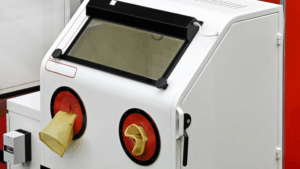
Blasting cabinets are smaller abrasive blasting enclosures. Operators place their hands into gloves that are built into the cabinet and move the nozzles to propel abrasive media onto the workpiece from outside the cabinet.
While blast rooms are usually the choice for large-scale and high-volume operations, blasting cabinets are compact and efficient when prepping smaller items.
While both effectively remove contaminants from surfaces, they serve different applications. Use the table below to compare the two options.
Blast Room
Blast Cabinet
Characteristic | Blast Room | Blast Cabinet |
Size | Large-scale room accommodates big workpieces, heavy-duty equipment or high-volume operations | Compact for smaller-scale parts and batch operations. |
Operation | The operator is inside the room wearing PPE and uses hand-held hoses and nozzles to manually control the process for precision results on complex or large surfaces. | The operator manages the process from outside the cabinet, using built-in gloves to manipulate blasting equipment and workpieces. Provides precision results. |
Media Recovery | High-tech media recovery systems collect and separate used media for recycling back into the process, reducing material and operating costs. | A less sophisticated media recovery system recovers media for reuse on a smaller scale. |
Safety | Requires PPE and a dust collection system for regulatory compliance. | A sealed environment contains dust and media. Does not require dust collection or ventilation. The operator is outside of the cabinet, decreasing hazards. |
Cost | Due to the larger size, dust collection and ventilation systems blast rooms are an investment, but the cost is offset in high-volume operations or that frequently treat large-scale, heavy-duty workpieces. | More compact and affordable for businesses that are short on footprint and/or budget. |
Application | High-volume, industrial-scale operations that work on bulky components for vehicles or aerospace or businesses that require the flexibility to accommodate different-sized components. | Lower-volume, batch-type operations that work on small- to medium-sized pieces that fit inside the cabinet enclosure and can be manipulated by hand. |