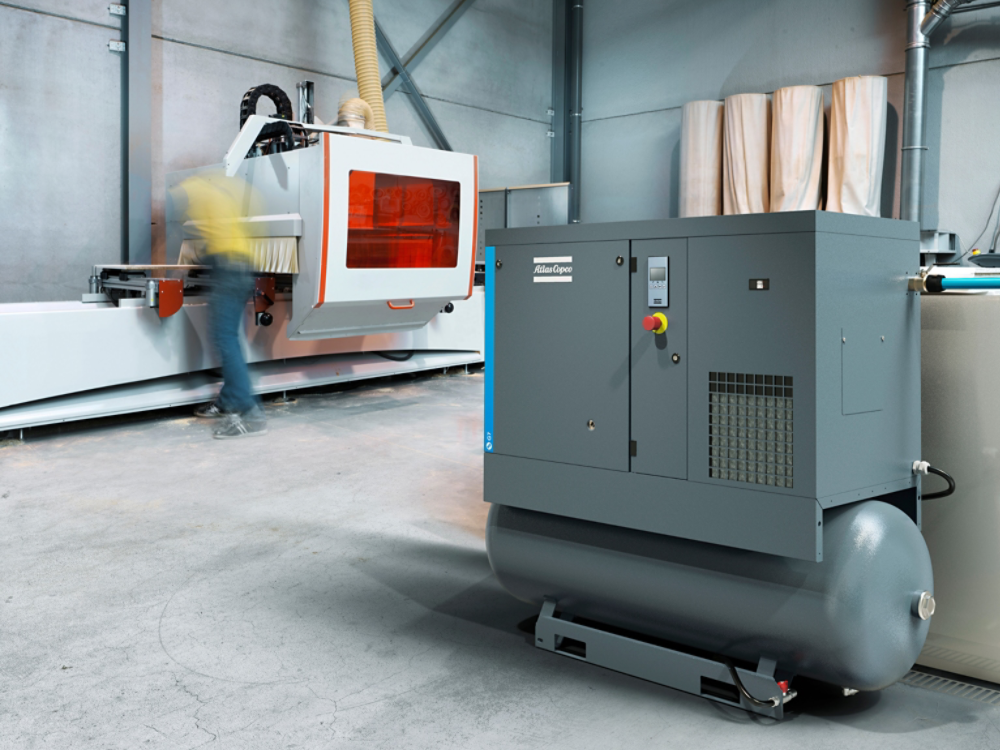
While large air compressors work well in large industrial facilities, they may be overkill for the light- to medium-duty tasks found in smaller production environments. However, compressors under 25 horsepower (hp) offer consistent, reliable air pressure without consuming a lot of power, making them a versatile and energy-efficient solution for light manufacturing and workshop settings. This blog will discuss the benefits and uses of small air compressors and provide tips for finding a compressor that meets the unique needs of your workshop.
Small Air Compressors Power Pneumatic Tools
Pneumatic tools, which operate on air rather than electricity or batteries, are the unsung heroes of small production environments because they offer high torque and high speeds in a lightweight package, helping to reduce operator fatigue and increase efficiency and productivity. An air compressor provides the pressurized air needed to power pneumatic tools, such as air-operated drills, sanders, impact wrenches and sandblasting equipment.
Air pneumatic tools are mounted to a compressor with a hose and a regulator, which is adjusted to match the operating pressure of the tools. Then, the compressed air runs through the hose and into the tool, activating operation. Larger air compressors, which are essential in heavy-duty manufacturing operations, may prove too large, loud and inefficient for the intermittent, lighter-duty tasks found in workshops. But, small, quiet air compressors – those under 25 hp – offer enough power for these tasks in a compact package, making them an efficient and versatile solution for small production environments.
The Benefits of Small Air Compressors for Lighter Duty Tasks
Small air compressors are ideal for small production environments where they help boost productivity and cut costs.
Here are 8 worthwhile benefits of using small air compressors for light-to-medium duty tasks:
- Peak performance in a small size: In small production settings, space is likely at a premium. Although air compressors under 25 hp are space-efficient, they produce the air flow and pressure needed to power the equipment used in light manufacturing and workshops.
- Energy efficiency: Because smaller compressors operate at lower power levels than large compressors, they consume less electricity, making them an energy-efficient option for small production settings.
- Lower cost solution: Small air compressors are less expensive to purchase, operate and maintain than larger ones, providing significant cost savings for workshops with tight budgets.
- Quiet operation: Large air compressors can be loud, which can be especially disruptive in smaller environments. Small, quiet air compressors create a safer, more pleasant workplace, enhancing worker satisfaction and safety.
- Versatility: Workshop air compressors are powerful enough to manage a variety of tasks, such as inflating tires, operating pneumatic tools and running small sandblasters.
- Portability: Small air compressors are designed to be lightweight and portable so they can be moved to different areas of the shop as needed.
- Ease of use: Because workshop air compressors are less complex in design and operation than large industrial models, they usually offer simple controls and intuitive operation. They are also easier to maintain.
- Reliability: Despite their compact footprint, small air compressors are made stand up to frequent use in light manufacturing and workshop settings.
Ideal Uses for Small Air Compressors
The flexibility, efficiency, portability and reliability provided by top-rated small air compressors can help small production facilities optimize their workflows.
Applications for small air compressors include, but aren’t limited to:
Pneumatic tool operation: Small compressors excel at powering pneumatic tools, including air-operated nail guns, drills, sanders, impact wrenches, grinders and air hammers.
| Sandblasting equipment | Paint spraying | Inflating tires | Blowers |
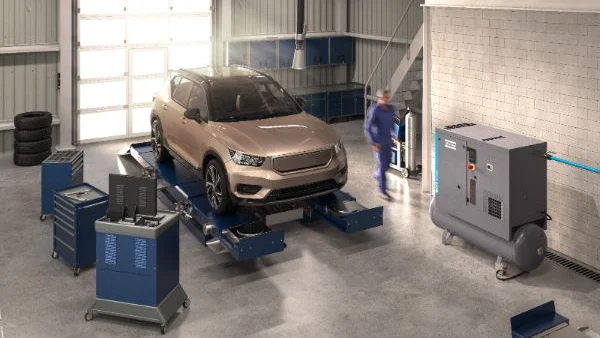
| Light sandblasting tasks, such as cleaning car parts, removing paint or preparing surfaces can be managed with small air compressors with a high cubic feet per minute (CFM) rating. | Small air compressors offer the consistent air pressure and flow needed to operate paint spraying equipment. | Small air compressors provide the uniform air pressure needed to fill tires in autobody shops. | Small air compressors can be used to operate pneumatic blowers to remove dust and debris from machinery and workspaces, reducing housekeeping efforts and ensuring reliability of equipment. |
How to Select a Workshop Air Compressor
Operators of pneumatic equipment in light production environments should look for the top-rated small air compressor that best meets the needs of their tasks. Consider the following when seeking a small compressor:
| Airflow/CFM | Ensure the compressor supplies adequate airflow, or CFM, to operate all the pneumatic tools and equipment that will be used simultaneously. To determine your compressor’s CFM requirement, find the CFM for each tool. Next, add the CFM requirements for all the tools that will operate at the same time. Finally multiply that number by 1.5 to ensure a buffer for periods of peak demand. This will determine the CFM requirement for your workshop. |
| Pressure/PSI | An air compressor’s pounds per square inch (PSI) rating indicates the amount of pressure produced by a compressor per square inch of area and impacts the compressor’s ability to provide the right amount of pressure, or force, needed for the job. To determine your PSI requirement, you do not have to find the sum of all the PSI values in the facility, instead use the PSI value of the tool that requires the greatest amount of pressure. For optimal performance, the selected compressor must deliver the required CFM rating at the proper PSI. |
| Horsepower | Models rated between 5 and 25 hp will likely offer enough power and be more efficient in light-to-medium duty applications. |
| Noise level | Especially in small workshop settings, the noise level should be low. |
| Duty cycle | Duty cycle, or the amount of time an air compressor can run before needing to cool down, is a key consideration. Small production environments may not require a 100% duty cycle for continuous operation as they often have intermittent air needs. A 70%, 60% or 50% duty cycle may be more suitable. |
| Tank size | Intermittent air requirements sometimes necessitate an air storage tank to ensure air is ready when needed. |
Let HTE Help You Find a Top-Rated Small Air Compressor
Whether sandblasting, inflating tires, using pneumatic tools or all of the above, small air compressors are an energy-efficient and cost-effective solution for small production environments that want to increase productivity, optimize workflows and cut costs. Let the experts at HTE help you find a top-rated small air compressor you can count on to get the job done.