
Skip to content
Home » Blog » Industrial Laser Marking Systems Provide Durable Product ID​

Industrial Laser Marking Systems Provide Durable Product ID​

    Industrial Laser Marking Systems Provide Durable Product ID

    By: Scott Wojciak

    Industrial laser marking systems offer manufacturers a fast, cost-effective way to apply permanent product identification laser markings on parts and products for compliance, tracing, tracking, product liability and quality control purposes.


    However, selecting a laser marking system can be tricky because each laser type is compatible with different materials. This blog explores three common laser types and discusses which laser types work best with various materials, helping you make an informed choice when selecting a durable laser marking technology.

    What are Industrial Laser Marking Systems?

    Often, as part of the manufacturing process, 2D barcodes, QR codes, serial numbers or other identification marks are applied to parts or products. This type of product identification is especially important in the automotive, aerospace, electronics, defense and medical manufacturing industries for quality control, product liability, tracking and tracing purposes.


    Traditionally, product ID marking was done using various ink printing technologies, but ink printing is an impermanent solution. Laser marking, on the other hand, provides a non-contact method of creating a permanent mark on a surface using a focused beam of light.


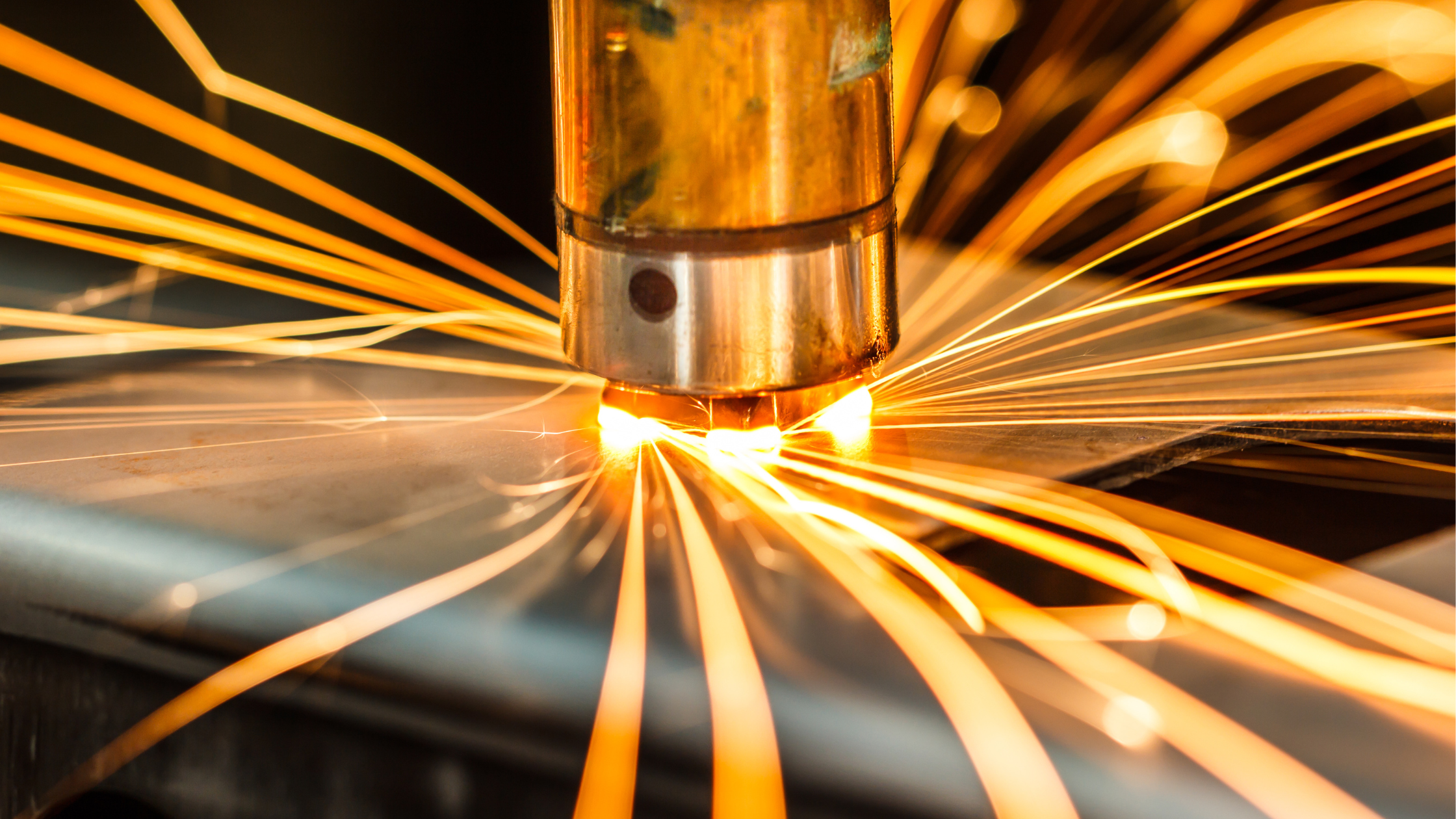
    Using today’s industrial laser marking systems, product identification laser markings are designed in a software program and transferred to the laser marking system, where a laser quickly and permanently applies the product identification mark onto the part.


    Different types of lasers – such as fiber lasers, CO2 lasers, and UV lasers – produce different results, depending on the material being marked and the marking method, which may include etching, engraving, oxidizing, or annealing.

    Laser Marking vs. Ink Printing

    When compared to ink printing, laser marking offers many advantages. The table below provides a clear comparison.

    Characteristic

    Laser Marking

    Ink Printing

    Durability of mark

    Permanent.

    Can be rubbed off over time.

    Speed

    Single marking process.  Some systems can mark up to 100 characters/second.

    Requires a multi-step process with slow cycle times.

    Material costs

    No consumables, low operating cost.

    Ink replacement costs.

    Maintenance requirements

    Periodic lens cleaning.

    Daily maintenance to check ink availability and flow. Daily cleaning to remove ink from equipment.

    Color capabilities

    Grayscale.

    Can print in color.


    In most cases, industrial laser marking systems are a superior solution for part marking because they quickly and efficiently provide a permanent mark without making contact with the part, require no consumables and have lower maintenance requirements. However, ink printing is a better option when color printing is required.

    3 Common Laser Types Used in Industrial Laser Marking Systems

    High-precision laser markers for industrial use are available with different types of lasers, each of which is best suited to different materials and applications.

    The three most common laser types include:

    • Fiber lasers: These lasers amplify light through optical fibers to create high-quality, precise, and durable marks that resist wear. They are used in the automotive, aerospace, and electronics industries to mark hard materials such as metals and some plastics.
    • CO2 lasers: To generate the laser beam, CO2 lasers use carbon dioxide, which makes them ideal for marking organic materials such as wood, glass, and leather. The process is fast and flexible and is often applied to packaging and textiles.
    • UV lasers: UV lasers mark products without generating heat (called cold marking) and can create very small, precise, and detailed marks on heat-sensitive materials that other laser types might damage, such as plastics, semiconductor,s and electronic components.

    Industrial Laser Marking Systems Material Compatibility

    Because different materials respond differently to laser marking, understanding the material properties of the parts you are marking and how they react to various laser technologies is crucial when selecting an industrial laser marking system.

    Typically, fiber lasers are used to mark metals because they provide deep, permanent marks on hard surfaces. CO2, fiber, or UV lasers may all be used to mark plastics, but a lower-power laser may be necessary to avoid surface damage. When marking non-metallic materials such as glass, ceramics, and organic materials, CO2 lasers are generally recommended. UV lasers are preferred for marking heat-sensitive materials because they offer cold marking.

    The following table demonstrates which laser types are typically compatible with various materials. However, it is always advisable to check with the experts at HTE to determine which laser technology is best suited to your specific material and application.

    Material

    Fiber Laser

    CO2 Laser

    UV Laser

    Metals (such as steel, aluminum and brass)

    Yes


    Plastics (such as ABS and acrylic)

    Yes, at lower laser power

    Yes, at lower laser power

    Yes

    Ceramics and glass


    Yes

    Yes

    Organic materials (such as wood, leather and textiles)


    Yes


    How to Select an Industrial Laser Marking System

    Selection of a laser marking system that is compatible with your material and can provide the required mark characteristics is essential for an efficient and effective process.

    Key selection considerations include:

    Material Compatibility: Different laser technologies are better suited to different materials. Understanding your material’s properties and its compatibility with different laser characteristics and wavelengths is essential to successful marking. For example, if you are looking for a laser marking machine for metals, one with a fiber laser will likely provide the best results.


    Marking Characteristics: Marking detail, depth, contrast, and visibility requirements will help determine the type of marking system required. For example, if you are marking a safety-critical automotive part that must be traceable throughout its lifetime, you will need a durable laser marking technology capable of creating a highly visible and permanent mark that resists wear. 


    Regulatory Requirements: In many cases, parts are marked for compliance purposes, so ensure the selected marking system meets industrial standards for permanent, legible marks, especially in industries such as automotive, aerospace, and medical device manufacturing.


    Environmental Conditions: If marked parts will be exposed to harsh conditions, such as mechanical wear, make sure the marking method creates marks that are deep and durable enough to resist wear.

    Laser marking systems allow manufacturers to apply precise, permanent identification marks on a variety of materials with high levels of efficiency at a low cost. However, selecting an industrial laser marking system that is compatible with the material being marked is critical to generating durable marks without damaging the material. Let the experts at HTE help you determine which system is best suited to your material and application to ensure compliant and efficient product identification.

    • Wojciak Scott

      Scott Wojciak, a seasoned executive with deep expertise in industrial automation and distribution, serves as Senior Vice President of Automation at Tavoron. He previously led the Fluid Power, Automation, and Engineered Solutions Division at Singer Industrial and held leadership roles at BW Rogers, including Vice President of Sales, Director of Sales, and Regional Business Unit Manager. Known for his results-driven approach and customer-focused leadership, Scott has spent his entire career advancing commercial strategy and operational performance across the automation sector. He began his career as a Sales Engineer and earned BW Rogers’ Salesman of the Year award early in his tenure.

      View all posts